Before polls closed on Sept 20, our campaign manager, Amara Possian, sent out one last e-mail with some reflections on the campaign.]]>
I’m on pins and needles. The final polls and projections from this election couldn’t be closer, including in many of the ridings where our climate champions have a real shot at winning.
But no matter what happens tonight, I’m so proud of what we’ve achieved over the last few weeks. So, before we leap into what’s next, I wanted to take a moment to thank you so much for everything we’ve already achieved together.
When the election was called five weeks ago, hundreds of you joined us for a mass call to kick off the Climate Emergency Voting Alliance, letting politicians know that all across this country people are ready to rally behind real climate champions.
You made sure climate was front and centre in this election.
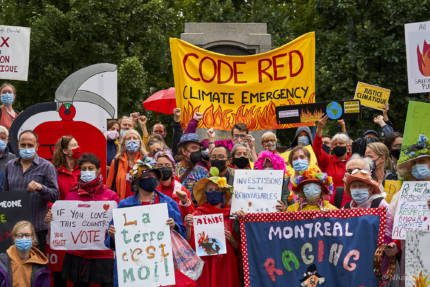
Weeks before the election was even called, more than 40 communities across the country mobilized outside MP offices in response to this summer’s unprecedented heat and fires. The first Canada On Fire Day of Action made it clear to politicians from coast to coast that they can’t hide from this unfolding climate crisis.
Then, in early September, we doubled down and organized another one. This time, more than 60 communities turned out, mobilizing from coast to coast just ahead of the Federal Leaders Debate. Over half the rallies were organized by first-time hosts! And, for the first time in history, we actually got a full climate segment in the leaders debate.
You reached so many voters to help elect climate champions.
We endorsed 29 candidates who represent a different way of doing politics and have proven they have the courage to take on the climate crisis with the kind of big, bold thinking we need. So many of you worked so hard and so smart to unite the climate vote behind these champions by donating and volunteering directly with their campaigns, talking to your friends and family, and sending thousands of text messages to get out the vote.
And, you did all this under tough circumstances. This election was called in the middle of a summer defined by climate disasters and on the cusp of the fourth wave of the COVID-19 pandemic.
Despite all the obstacles, we did something special together. We fought tooth and nail to get climate change on the agenda and forced all parties to chase the climate vote. Our movement is stronger than ever. We rose above partisan divides and party infighting, and focused on building people power in order to elect climate champions — and to hold every single MP accountable after the election. There’s no group of people I’d rather throw down with and I can’t wait to see what we do together next.
Tonight, we’ll be keeping track of the results and posting updates about all our champions on our Twitter, Facebook and Instagram. And, we’ll be in touch again tomorrow morning with plans for what comes next.
Thank you. Thank you. Thank you.
Amara
]]>
Yesterday, Climate Action Tracker released a new analysis that Trudeau’s climate record and ambition is “highly insufficient” and in line with 4ºC+ of warming. ]]>
Yesterday, Climate Action Tracker – a global body responsible for expert scientific reviews of climate plans around the world – released a new analysis that Trudeau’s climate record and ambition is “highly insufficient” and in line with 4ºC+ of warming. To put that in context, the raging wildfires that we experienced this summer were driven by just over 1ºC of warming. 4ºC of warming is almost unthinkably dangerous.
Here’s what the report had to say:
Canada has been feeling the brunt of climate impacts, with deadly heat waves and devastating forest fires on its West Coast. Recent climate policy developments, while positive, are insufficient to address the climate crisis. The country’s new and stronger 2030 target is not quite Paris compatible. Its revised climate plan and additional measures announced in the 2021 federal budget are insufficient to meet that target. Canada continues to face challenges in implementing policies. We estimate that Canada has missed its 2020 target, even with the pandemic emissions drop. The Trudeau government has called an election for September 20, giving Canadians the opportunity to have their say on the state of climate action in the country.
Click here to read the Climate Action Tracker analysis in full.
Right now, this news isn’t breaking through in the election campaign. Most people in Canada are seeing ads, backed by millions of dollars in Liberal spending, telling them that Justin Trudeau is a climate leader. Trudeau and the Liberals are spending millions in advertising costs to hide the fact that Canada has the worst climate record in the G7. We need to change that. Can you help by sharing this blog?
If we flood our networks with this news and make sure that our friends, family, and communities know the truth – that Liberal climate delay is putting us on a path to dangerous warming – we can make the case for electing real climate champions.
There are less than 4 days until polls open, and after the summer of heat, fires, smoke and flooding we experienced across this country, we need to make sure that we’re electing real climate champions. To do that, we need the public to know the truth about Justin Trudeau’s failure to tackle the climate crisis. We can do that by ensuring this new report is seen by as many people as possible.
Together, we can make it happen.
]]>
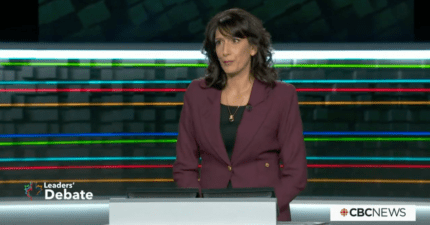
Last night, federal leaders gathered for the one and only English language debate of this election. The good news was that, for the first time ever, there was an entire debate segment about climate change. The bad news is that it missed the mark and failed to give voters the information they need, namely whether or not any of our political parties actually have a plan to meet the climate emergency.]]>
Last night, federal leaders gathered for the one and only English language debate of this election. The good news was that, for the first time ever, there was an entire debate segment about climate change. The bad news is that it missed the mark and failed to give voters the information they need, namely whether or not any of our political parties actually have a plan to meet the climate emergency.
It’s especially disappointing because they really only needed to ask one question – will you leave enough fossil fuels in the ground to meet our climate obligations?
This Wednesday, while thousands of people across Canada were participating in a national day of climate action, the journal Nature published a major new climate report. Titled “Unextractable fossil fuels in a 1.5 °C world,” the report is an update to previous estimates on how much global fossil fuels would need to be left in the ground to meet the Paris Agreement commitment to limit warming to 1.5ºC. And, the news for Canada is stark.
According to the report, Canada needs to leave 83% of our proven oil reserves, 80% of gas and 83% of coal in the ground to do our part. Diving deeper into the oil numbers, the report found that “84% of the 49 billion barrels (Gb) of Canadian oil sands we estimate as proven reserves” need to stay in the ground.
These numbers put Canada among the top nations when it comes to the amount of fossil fuels we need to leave in the ground to do our part in keeping the world below 1.5ºC. For a country with a massive fossil fuel sector, this is a huge problem. And, it’s one that requires big, bold solutions to both meet the climate moment, and ensure that we don’t leave workers and communities – especially rural and Indigneous communities – behind in doing so. But, watching the debate last night, you wouldn’t really know if any of our political leaders really understand that.
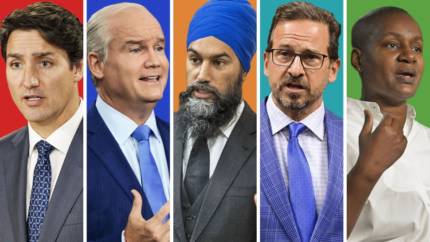
At this point in the campaign, no federal leader has faced a serious line of questioning on the need for Canada to leave fossil fuels in the ground. The Liberals added a vague promise to their platform to regulate oil and gas companies in line with their promise to meet net zero emissions by 2050, but what that actually means is still anyone’s guess. And, most other parties aren’t much better. Many pundits are giving the Conservatives points for being in the climate game in 2021, but their plan lets Big OIl keep expanding with a promise that $5 billion invested into carbon capture will deliver some kind of silver bullet down the line. And, while the NDP platform pledges to cut fossil fuel subsidies and puts some big policy ideas on top of keeping the Liberal carbon price, including just transition policies, the NDP leader still can’t bring himself to promise to stop fossil fuel expansion. Although an encouraging number of climate focused candidates seem willing to. The Green leader has pledged to stop fossil fuel expansion, but unfortunately the party is in rough shape and fighting for their lives, not driving the debate or seriously competing for power.
Canada needs to undergo a major economic transformation if we’re going to meet the climate crisis. We have to leave more than 80% of our fossil fuel reserves in the ground. We need to stop being one of the world’s largest fossil fuel exporters and chart a new course. For many, myself included, the promise of a just transition that puts us on the path to a Green New Deal is the most appealing option. But, it’s not the only option, and voters in this country deserve to hear how every political party will meet this moment.
And, the parties’ plans deserve to be scrutinized. We need to know what the Liberals actually plan to do when they promise to regulate oil and gas. Will they cap expansion in line with levels outlined in the Nature report? Or, like the Conservatives, will they hedge their bets on unproven carbon capture technologies to offset ongoing fossil fuel expansion?
We deserve to know whether any party has a real plan to support workers and communities through a just transition. That means more than consultations and rhetoric. We need real plans to guarantee jobs for workers and take on big public works projects to retool our economy away from fossil fuels. And, we need to know not just who has policies, but serious plans to make them happen. How do parties that can’t form government plan to make governing parties enact their policies?
We deserve answers to these climate questions and we aren’t getting them from politicians and we didn’t get them from last night’s debate. But, we can change that by rallying behind real climate champions, the kinds of candidates who understand the scale of this crisis and can actually answer the question – “a new report says that Canada needs to leave at least 80% of its fossil fuel reserves in ground to meet our Paris commitments, how will you do that?”
Key battlegrounds are close races where climate champions have the potential to defeat Liberal climate delayers and Conservative climate deniers.]]>
On September 9, 350 Canada announced candidate endorsements in 16 battleground ridings.
For most of our lives, we’ve been told there are only two choices when it comes to climate politics in Canada. We can choose a Conservative government that either doesn’t believe in climate change, or just doesn’t believe that it’s an urgent crisis. Or, a Liberal government that talks about believing in science and tackling the climate emergency, but then acts as though we have decades to solve the problem.
In this election, there’s another way.
Across the country, there are battleground ridings where a candidate has a real shot at unseating a climate denier or a climate delayer – if climate voters rally together to back that candidate.
In this round of Battleground Endorsements, we’ve narrowed in on a handful of close ridings where this is true, and a couple ridings that are longer shots, but where someone is challenging some of the worst climate delayers and deniers in the country.
In all of these ridings, voters have a chance to unseat delayers and deniers and elect candidates who they can push to ensure they have an MP who can become:
In addition to these candidates, and the Defending Champs and Game Changers we already endorsed, we’ve received a number of nominations for other climate champions. We’ll be reviewing those next to determine if we release another round of endorsements.
If you know a candidate who deserves our endorsement, you can nominate them here.
If you don’t live in a riding with a climate champion and are wondering how the parties all stack up on climate change, you can read our analysis of the party platforms here.
Key battlegrounds are close races where climate champions have the potential to defeat Liberal climate delayers and Conservative climate deniers.
350 Canada’s battleground endorsements are:
We wanted to provide you with a clear-eyed and honest take on the parties’ climate platforms and what they mean in the context of our political system.
]]>
If you’re reading this, you probably want to know which party has the best platform to deal with the climate crisis. It’s an important question, but there are already countless “report cards” out there that break down exactly what the parties are promising. So instead, we wanted to provide you with a clear-eyed and honest take on not just the parties’ climate platforms but what they mean in the context of our political system and this election.
First, a disclaimer. Platforms are promises, not policy. We all remember Justin Trudeau’s promise to make the 2015 election the last one to be run under a first-past-the-post voting system. And, we remember that it took Trudeau two years to start moving forward a Just Transition Act, which he called a “top priority” during the 2019 election. And, he only did it on the eve of calling this election and under serious public pressure.
With other parties, we also have another problem that is made worse by Trudeau’s broken promise on electoral reform. For parties that are unlikely to form government or the official opposition, their platforms often include ideas that may win them votes, but ones they can’t— or won’t— ever have the power to implement.
Taken together, that means that while platforms are important, they need to be considered in relation to the harsh realities of our political system where politicians lie and parties promise things to get votes, but then change priorities once in office. They also need to be considered in relationship to winnability. The simple truth is that a party can have the best platform, but if they don’t actually have a chance of winning enough seats to wield power in Parliament, we have to ask, how likely are those promises to become policy?
With that out of the way, let’s dig in.
Ahead of this election, the Liberals had to make a choice about their climate platform. They could have read the recent reports from the IPCC and IEA laying out the urgent need for Canada to up its climate ambition, end fossil fuel expansion and get to work on a just transition, and put forward a platform that presented a bold pathway forward on climate. Or, they could have doubled down on their existing plan— adding some new vague promises before campaigning more so against the Conservatives rather than for their own vision of a bold climate plan. Unsurprisingly, they chose door number two.
The Liberal climate platform is basically the climate plan they announced in 2015 and updated earlier this year. Their emissions target is 40-45% cuts below 2005 levels by 2030 and net zero by 2050. Meeting their promise of “net zero emissions” by 2050 largely hinges on a carbon price and unproven technology. In fact, rather than a managed decline of the fossil fuel industry, the Liberals are promising billions for carbon capture technologies that don’t exist yet, and that the fossil fuel industry views as a license to continue expanding.
That being said, the Liberals announced they plan to regulate emissions from the oil and gas industry to meet net zero emissions by 2050, a notable departure for a party that has seemed terrified to utter the words “oil and gas” and “climate change” in the same sentence. The problem is, they haven’t offered any clarity on what this means. Some Liberal candidates have suggested this amounts to an emissions cap on oil and gas, but it’s unclear who sets that cap and how the government will enforce it.
The Liberals finally started working on the Just Transition Act they promised in 2019 just before the election, after tremendous pressure from civil society. And, they promised $2 billion for green job creation “in oil and gas-reliant communities in Alberta, Saskatchewan and Newfoundland and Labrador” in their platform. But, it’s important to remember that this is ten times less than they’re spending on the Trans Mountain pipeline, and nowhere near the scale of investment we need. While we’re on the subject of federal funding for fossil fuels, the Liberals have promised to end “inefficient” fossil fuel subsidies, bumping up their deadline to do so from 2025 to 2023 in this election. But, they also gave $18 billion to big oil in 2020, triple what they gave in 2019.
They’ve announced a zero emissions vehicle mandate, with a near term goal of 50% of all vehicles sold in Canada being ZEV by 2030. But, some suggest that the target needs to be 100% by 2030 or earlier to meet Canada’s pledge to keep warming below 1.5ºC.
While it is no small miracle that the Conservative Party has a climate plan, we’re not in the business of giving out participation ribbons for climate action. It’s important to note that the Conservatives have rejected Trudeau’s 40-45% emissions cuts by 2030 target in favour ofStephen Harper’s targets of 30% by 2030. More important to note is that both of these targets are way too low.
The Conservative plan largely hinges on a strange “low carbon savings account” program that’s been compared to Canadian Tire Money or Petro Points. It’s a confusing program that most experts think will do little to reduce emissions, and likely will increase Canada’s carbon output.
Interestingly, the Conservatives have changed their tune on a carbon price, supporting a carbon price of $20/tonne, rising to $50/tonne for individuals, with a higher price for heavy emitters. Colour us skeptical when it comes to believing that the Conservatives will follow through on putting a higher carbon price on Big Oil than the rest of us, but they are trying to appeal to a legitimate populist anger that exists around carbon pricing treating the average person as if they’re as responsible for climate change as Big Oil and other major polluters.
The Conservative plan has nothing about a just transition. And, rather than reining in or phasing out fossil fuels, pledges massive, $5 billion investments in carbon capture and expanding fracking and LNG exports to prop up another wave of fossil fuel expansion. They have a 30% electric light duty vehicle mandate by 2030 and have effectively pledged to increase fossil fuel subsidies with promised support and tax breaks for Big Oil.
The NDP seem to be taking climate change more seriously in 2021 than they did in the last election. But, that doesn’t mean their platform is perfect. The NDP targets are “at least 50%” cuts by 2030 and net zero emissions by 2050, which is closer to Canada’s fair share of 60% cuts by 2030 than the Liberals, but should be stronger. In particular, it’s unclear where the NDP stands on defining “net zero” and it would be better to see them talking about absolute zero emissions and phasing out fossil fuels. For many voters, this is particularly important since there is a degree of distrust in the NDP when it comes to standing up to Big Oil given how the NDP governments in Alberta and BC have cozied up to oil and fracking companies.
The NDP have pledged to end fossil fuel subsidies and to do a review of the Trans Mountain pipeline, but leader Jagmeet Singh has stopped short of outright saying he would cancel it. However, a number of candidates have gone that far or pledged to cut off federal funding for the project. The NDP has also promised to have 100% zero-emissions vehicle sales by 2035, to include Indigenous peoples in shaping Canada’s climate policy and to create a federal Office of Environmental Justice.
The most interesting elements of the NDP’s climate platform are their promises around a just transition. They’ve promised a “civilian climate corps”, doubling public transit funding to make it fully electric by 2030, and a massive job creation program to put people to work on climate solutions. They’ve also made pledges around green transit, green buildings and transition policies like support and training for affected workers that could start Canada on the path towards a Green New Deal. And, they’re promising to pay for it with a wealth tax. It’s nowhere near everything we need, but it’s a better start than we’re seeing from other parties.
The Greens have the most ambitious climate targets on the table and, arguably, the most ambitious platform of any party. They’re pledging to cut emissions 60% by 2030 and meeting net-zero emissions “as soon as possible” with a goal of negative emissions by 2050. But, these promises also need to be weighted with how likely the Greens are to hold enough power to turn them into policy.
The Greens have also pledged a full stop to fossil fuel expansion and extraction. They promise a fracking ban, no new pipelines and an end to all fossil fuel leasing on lands under federal government control. They’ve also pledged to pass a Just Transition Act by the end of 2021, alongside some big transition policies, like a pledge to replace every lost fossil fuel job with a high paying green job, creating a youth climate corps and incentivizing green investment.
Green leader Annamie Paul also talks a lot about a “carbon border adjustment”, essentially a tax on goods crossing the border depending on their climate impact. It’s an interesting idea that other parties also have expressed some support for, but there are some serious questions about the goals and implementation.
If you live in Quebec, the Bloc Quebecois is also in the mix, and have historically been a leading voice when it comes to pushing climate policy. In August, they released their platform, which calls for increasing Canada’s climate ambition and accelerating a fossil fuel phase out. But, while the basics of the Bloc’s climate plan are sound, some of the Bloc’s policies focus so much on securing benefits for Quebec that they also create challenges for tackling the climate emergency across Canada.
The Bloc is opposed to fossil fuel transport through Quebec. They’re also proposing a new equalization transfer that moves money from heavily polluting provinces to those, like Quebec, that are leading on climate action. This probably all sounds great to Quebecers, but presents major challenges for the rest of the country. The simple fact is that Quebec probably needs some of the least support to accelerate climate action, while workers and families in provinces like Alberta will need big, bold just transition policies as we make the shift off fossil fuels. The Bloc’s plans ignore this in favour of appealing to Quebec voters, and risk pushing a dangerous polarity that Big Oil loves to exploit, arguing that eastern Canada, especially Quebec, has it out for the west.
We need federal policies that understand Canada is built on a lot of fossil fuel extraction, and because of that, we need a big, visionary transition in the vein of a Green New Deal. While the Bloc clearly understands the science and urgency of climate action, their somewhat cynical, Quebec-first approach could create more problems than it solves when it comes to delivering the kind of action we need across Canada.
If you’ve read this far, you might still be wondering who to vote for.
If you’re in a riding where 350 Canada has endorsed a climate champion, we recommend voting for the endorsed candidate. These candidates represent defending climate champions, political game changers and candidates with a real chance of unseating a climate delayer or climate denier. Many of them have made promises that go beyond their party platforms and have shown a willingness to push other politicians within and outside their parties to do what it takes to tackle this crisis. They’re also all in ridings where uniting the climate vote will help them win the race.
If you don’t have a champion in your riding, the best thing you can do is organize before you vote. That means rather than voting alone, getting together with your community, especially other climate voters, to talk about who you collectively think is the best climate candidate to vote for in your riding. Doing that will help you make the most effective choice about who to vote for, and will mean that even if you end up having to vote for someone you don’t 100% agree with, you’ll already be organized to push them on day one if they win.
]]>
These 7 Game Changers could upend the status quo of climate inaction in Canada but they are in some tough fights and they need your help to win their seats in Parliament.
]]>
]]>
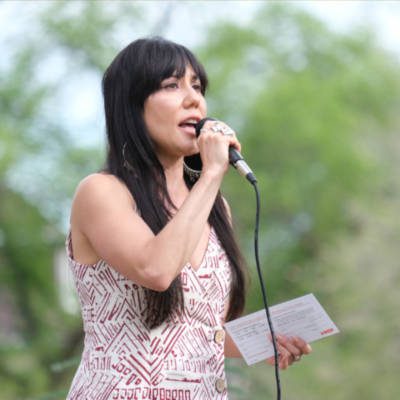
Game Changers are activists and social movement leaders who are running for office to address the roots of the climate crisis, inequality, and colonization. If elected, these Game Changers could transform Canada’s political status quo.]]>
On August 31st, 350 Canada released our second set of endorsements for the 2021 election.
This time, we focused on “Game Changers”— a set of 7 candidates, most of whom are running for the first or second time in their lives, who will bring critical voices and vision to Parliament. Game Changers are activists and social movement leaders who are running for office to address the root causes of the climate crisis: inequality, racism and colonialism. All of these candidates have deep roots in their respective communities and long histories of demanding action on social and climate justice. If elected, these Game Changers could transform Canada’s political status quo, ushering in ambitious action on the climate emergency that improves the lives of working people across the country.
On the west coast, both Anjali Appadurai and Avi Lewis are leading voices in the climate justice movement and vocal advocates for a made-in-Canada Green New Deal. In the BC Interior, Joan Philip is an Indigenous leader deeply involved with the resistance to the Trans Mountain pipeline. In Saskatchewan, Tria Donaldson has been both a climate activist and union organizer, giving her a unique and important perspective on the critical need for a just transition. Parkdale-High Park candidate, Paul Taylor, has spent years working on addressing poverty, food insecurity, and climate change in Toronto. While in PEI, Anna Keenan is another long-time climate activist, who has worked across Canada and around the globe building and strengthening the climate movement. And, in Labrador, Amy Norman is a young Inuk woman who has lived on the frontlines of climate change her entire life and is championing a platform that meets the urgency of the crisis while centering economic justice and Indigenous rights.
We applied similar criteria to the first round to these Game Changers;
In addition to their records, we looked at polls and projections to find Game Changer candidates who have a chance of winning their ridings if climate voters rally behind them. That doesn’t mean they’re shoe-ins, or even favourites, but they all have a good shot at winning if we rally behind them and organize our communities to do the same.
Very soon we will roll out our next round of endorsements, a set we’re calling “Key Battlegrounds.” These endorsements will lift up potential climate champions who have a good chance of unseating a climate denier or a climate delayer.
If you know a candidate who deserves our endorsement, you can nominate them here.
Game Changers are activists and social movement leaders who are running for office to address the roots of the climate crisis, inequality, and colonization. If elected, these Game Changers could transform Canada’s political status quo.
350 Canada’s Game Changer Climate Champions are:
On August 20th, 350 Canada announced our first set of endorsements for the 2021 election. These are our “defending champions,” the incumbent candidates who, over the course of the last parliamentary session, did the most to champion the kind of climate action we need to see. ]]>
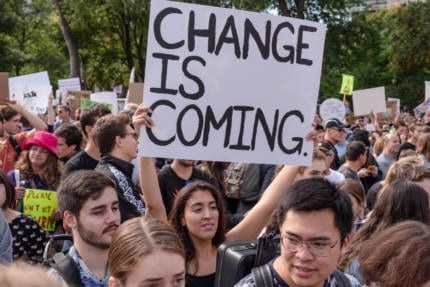
On August 20th, 350 Canada announced our first set of endorsements for the 2021 election. These are our “defending champions,” the incumbent candidates who, over the course of the last parliamentary session, did the most to champion the kind of climate action we need to see. We’ll be releasing more endorsements in the future, focusing on ridings where a climate champion has the chance of unseating a climate delayer or a climate denier, but in the meantime, here’s how we chose our first round.
First, we narrowed down only to those candidates who were elected as MP’s in 2019 and would be running again in 2021. Second, we looked at their records and focused in on three criteria:
Using these criteria, we adopted a “show us, don’t tell us” approach to deciding who to endorse, choosing to only name climate champions who truly stepped up and led. Simply talking about the climate crisis wasn’t enough. We looked for real, concrete actions to try and legislate on the climate crisis, hold the government accountable for their inaction and work outside of the House of Commons to build pressure for emergency level climate action.
This is just our first “defending champions” round of endorsements. Next, we’ll be digging into those champions who have a real shot of unseating delayers and deniers. If you know a candidate who deserves our endorsement, you can nominate them here.
Defending Champions are incumbent candidates who, over the course of the last parliamentary session, did the most to champion the kind of climate action we need to see.
350 Canada’s Defending Champions are:
This will be an election in the middle of a climate emergency. The stakes couldn’t be higher. That’s why I’m writing to let you know about our plan to raise the bar for climate leadership in this critical election]]>
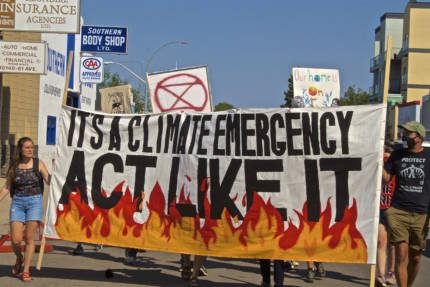
It’s finally official. Justin Trudeau has called a federal election and voters will head to the ballot box on September 20th to elect a new government. This will be the first election to take place under blood red, smoke-covered skies with dozens of communities on evacuation alert due to climate-driven wildfires. And, it’s kicking off just one week after the IPCC released another sobering report that was described as a “code red for humanity” to up our climate ambition. This will be an election in the middle of a climate emergency. The stakes couldn’t be higher. That’s why I’m writing to let you know about our plan to raise the bar for climate leadership in this critical election. Here it is:
Politicians have failed us time and again. That’s why we believe that building a bold movement for climate action from the bottom-up is a winning strategy for this election. Together, we can rise above partisan divisions, and focus on building the people power we need to elect climate champions this fall, and hold every single elected leader accountable after the election. This could be our chance to transform Canada’s climate politics but we can’t do it without your help. I hope you will stand with us.
Photo: Allan Lissner
]]>
We’re shifting from calling for a Climate Emergency Alliance between the NDP and Greens to building a Climate Emergency Voting Alliance. Because, like all the best ideas in politics, this one is going to have to come from the bottom up.]]>
As you might have heard, we’re on the cusp of an election. Rumours are that a federal election will be called either this weekend or next weekend and we could head to the polls by mid-September.
Elections are always important, but this year, with extreme heat, wildfires and flooding bringing the reality of the climate crisis home to so many people across Canada, it’s all the more important. That’s why I’m writing to you today with an update on our election plans.
As you know, a few months ago we launched a campaign calling on the Green Party and the NDP to form a Climate Emergency Alliance. Our theory, based on exhaustive research and modelling, was that only by working together could parties with stronger climate ambition than our current government win enough seats to deliver on climate.
Unfortunately, but unsurprisingly, the only people to embrace this idea were voters, grassroots party organizers and a few candidates who truly understand the scale of this crisis and the need for bold, ambitious solutions. The party leaders and their advisors put partisan politics ahead of a bold climate vision.
That’s why we’re shifting from calling for a Climate Emergency Alliance between the NDP and Greens to building a Climate Emergency Voting Alliance. Because, like all the best ideas in politics, this one is going to have to come from the bottom up.
Instead of asking the parties to come together to elect climate champions, we’re going to do it ourselves, building a cross-Canada voting alliance to back the kind of bold, ambitious climate action we need.
Here’s the plan:
First, we’re going to make sure that the climate emergency is a top issue this election. Building off the success of last week’s On Fire Day of Action, we’re going to mobilize again in the coming weeks to bring out thousands of people across the country to make it clear to politicians from coast to coast that they can’t hide from this unfolding climate crisis. Then, we’ll use this momentum to push politicians and parties to up their climate ambition.
Then, we’re going to rally behind true climate champions who have a chance of unseating the climate deniers and climate delayers who are utterly failing to meet the climate emergency in government.
We believe building a Climate Emergency Voting Alliance from the bottom-up is a winning strategy. We know we can’t rely on politicians and party insiders. But we can rise above partisan divides and party infighting, and focus on building the people power we need to elect climate champions this fall, and hold every MP accountable after the election.
We’ll share more about this plan in the coming days along with ways to get involved once the election is called, but for the time being we wanted to make sure you know what we’re thinking and how our plans are evolving in response to developments over the past few months.
Together, we can make this election count.
Onwards,
Amara
Photo Credit: Wen Chan
]]>